It’s easy to talk about systemic equilibrium when the monthly paycheck hits like clockwork. That is “times of peace” (居安). But true autonomy means engineering a system that doesn’t collapse when an external dependency is suddenly severed.
If a notification pops up tomorrow morning locking me out of my corporate accounts, I cannot afford to let my internal subsystems hijack my executive function. I need a cold, calculated deployment strategy already sitting in version control.
Here is how I architect my preemptive “Layoff Protocol” by assigning the right jobs to my internal ecosystem.
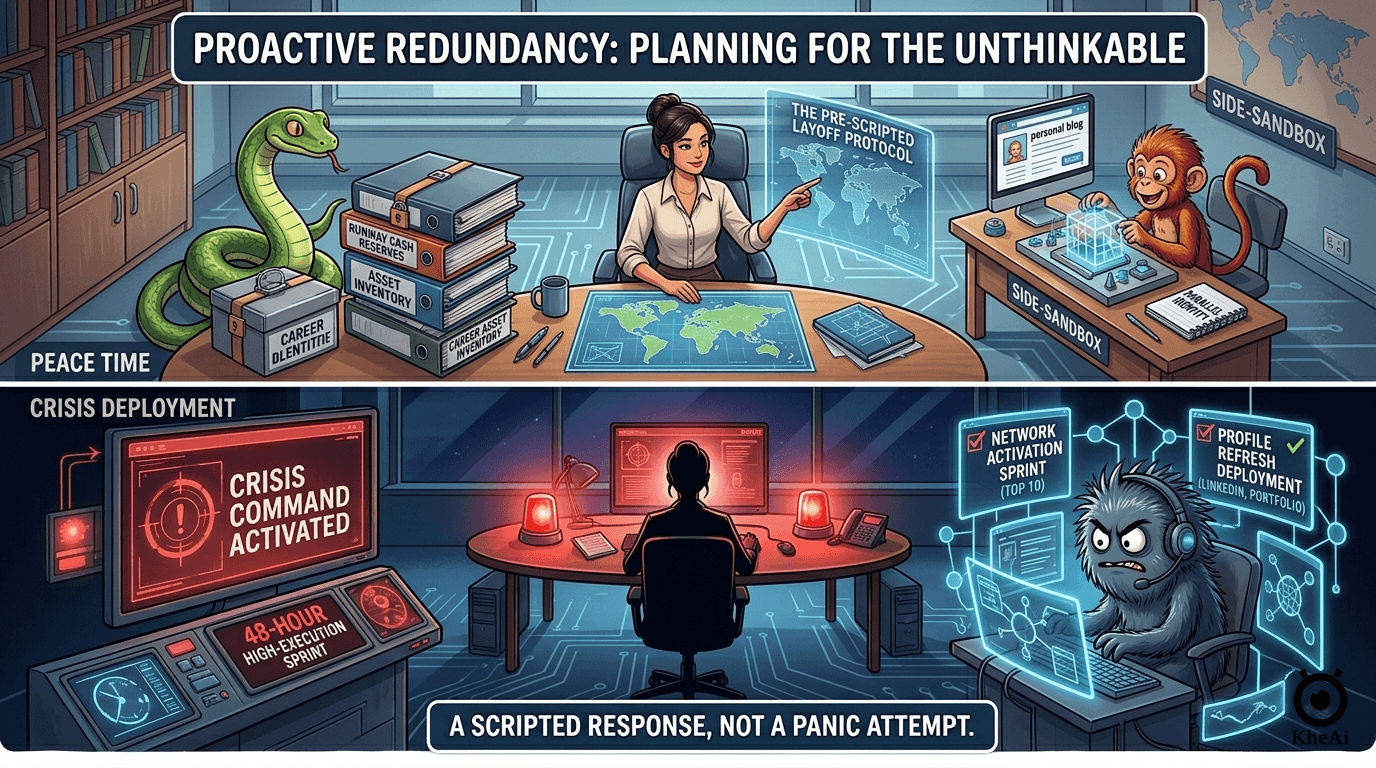
1. De-escalating the Snake: The Absolute Survival Baseline
The moment the word “layoff” is uttered, the Snake smells an existential threat. It screams, “We are going to starve, lose the house, and fail completely!” Left unchecked, the Snake will paralyze you with panic or force you to panic-apply to terrible, low-paying jobs out of sheer desperation.
The Peace-Time Strategy: Telemetry & Runway
To keep the Snake calm, I feed it brutal, objective data. The Snake calms down when it sees walls and parameters.
- The Runway Calculation: I maintain a clear, updated spreadsheet of my exact “Survival Burn Rate”—the absolute minimum cash required to live monthly if all luxuries are slashed to zero. Knowing I have a 3-month, 6-month, or 12-month runway converts vague, terrifying existential dread into a manageable countdown timer.
- The Asset Inventory: Keep an offline, personal backup of your non-proprietary wins, metrics, system architectures you designed, and praise from colleagues. The Snake fears being empty-handed; showing it your accumulated career capital reminds it that you are the asset, not the company.
2. Setting the Sandbox for the Monkey: Building a Parallel Identity
When people get laid off, the Monkey suffers a massive identity crisis. It loses its social status, its daily routine, and its consistent source of professional validation (dopamine). If your entire identity is tied to your job title at Company X, the Monkey will spiral into depression or distracting avoidance.
The Peace-Time Strategy: The Side-Sandbox
I never let my primary job be the only thing that engages my Monkey.
- The Professional Playground: Maintain a personal blog, an open-source project, a consulting side-hustle, or a deep-dive learning habit. This is the Monkey’s sandbox.
- The Mitigation: If I am laid off tomorrow, my Monkey doesn’t feel like it lost its whole world. It simply shifts from 10% attention on the sandbox to 100%. Having a pre-existing playground ensures that on Day 1 of unemployment, I wake up with a creative project to immediately dive into, bypassing the “grief wall.”
3. Deploying the Panic Monster: The 48-Hour High-Execution Sprint
The Panic Monster loves a crisis. If you get laid off, it wants to wake up and cause a frantic, uncoordinated mess—sending messy resumes to 50 companies in one afternoon, crying on LinkedIn, or messaging random recruiters with desperate pitches.
The Peace-Time Strategy: The Pre-Scripted Crisis Command
Instead of letting the Panic Monster run wild, I build a “Break Glass in Case of Emergency” script. I channel that raw adrenaline into a highly structured, 48-hour execution sprint.
- Hour 1–12: System Shutdown & Grace. Do nothing professional. Let the emotional shock process. Vent, run, sleep. Ensure the Snake and Monkey feel safe.
- Hour 12–24: Network Activation. Pull up a pre-made, hidden list of my top 10 trusted industry peers, mentors, and recruiters. Send a highly polished, confident, parameterized message: “Hey [Name], I’m transitioning out of my current role and exploring new architectural or leadership challenges in [Niche]. Let’s catch up this week if you have 10 minutes.” (No desperation, pure value positioning).
- Hour 24–48: The Profile Refresh. Bring your pre-saved portfolio, update LinkedIn, and set your status to open.
The Layoff Contingency Matrix
By preparing this architecture ahead of time, “居安思危” ceases to be a stressful philosophical anxiety and becomes a robust disaster-recovery protocol.
| Subsystem | If Caught Unprepared (Chaos Mode) | Pre-Scripted Protocol (Systemic Mode) |
|---|---|---|
| The Snake | Paralyzes you with fear; forces a desperate, low-value job acceptance. | Quietly reviews the “Runway Spreadsheet” and realizes, “We have 6 months of air. We are safe.” |
| The Monkey | Spirals into worthlessness, social shame, and distraction. | Pivots immediately to the personal sandbox, turning a career break into an exciting building phase. |
| The Panic Monster | Fires off low-quality, frantic resume blasts that damage your professional brand. | Executes a highly precise, 48-hour network and portfolio deployment script. |
My Point of View: The Ultimate Epiphany
The true test of system autonomy isn’t how you perform when the server is green; it’s how your failovers engage when the primary database drops offline.
By answering “What if I am laid off tomorrow?” right now, in a state of calm, I take the weapon of surprise away from corporate volatility. I don’t control the market, and I don’t control the board of directors at my company. But I own my internal architecture.
If the axe falls tomorrow, it will certainly sting. But the boardroom inside my head won’t panic. The Snake will guard the runway, the Monkey will build in the sandbox, and the Panic Monster will drive the execution of the new job hunt.
How does your internal ecosystem react when you simulate this scenario? Does the Snake instantly try to shut down the thought, or can you start writing your “Break Glass” script today?